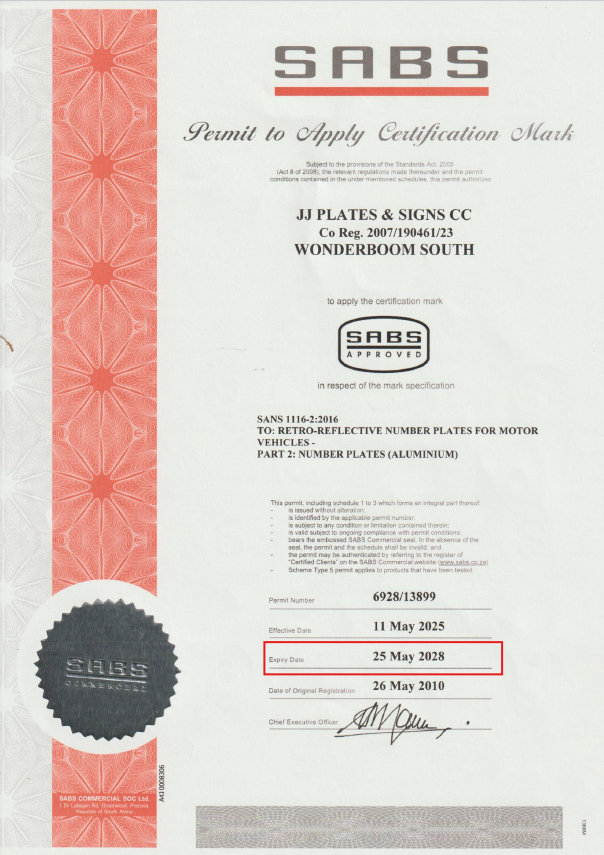
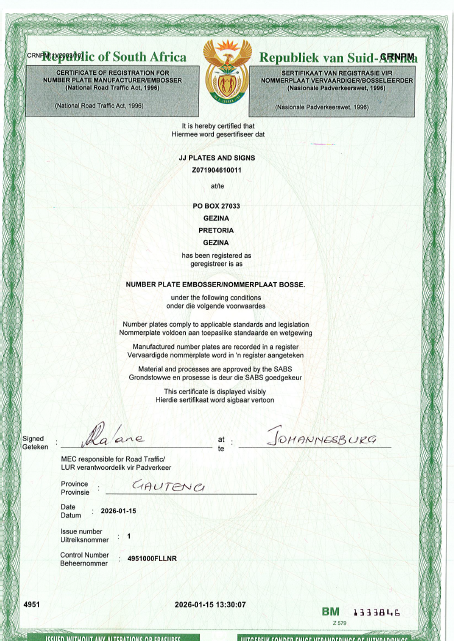
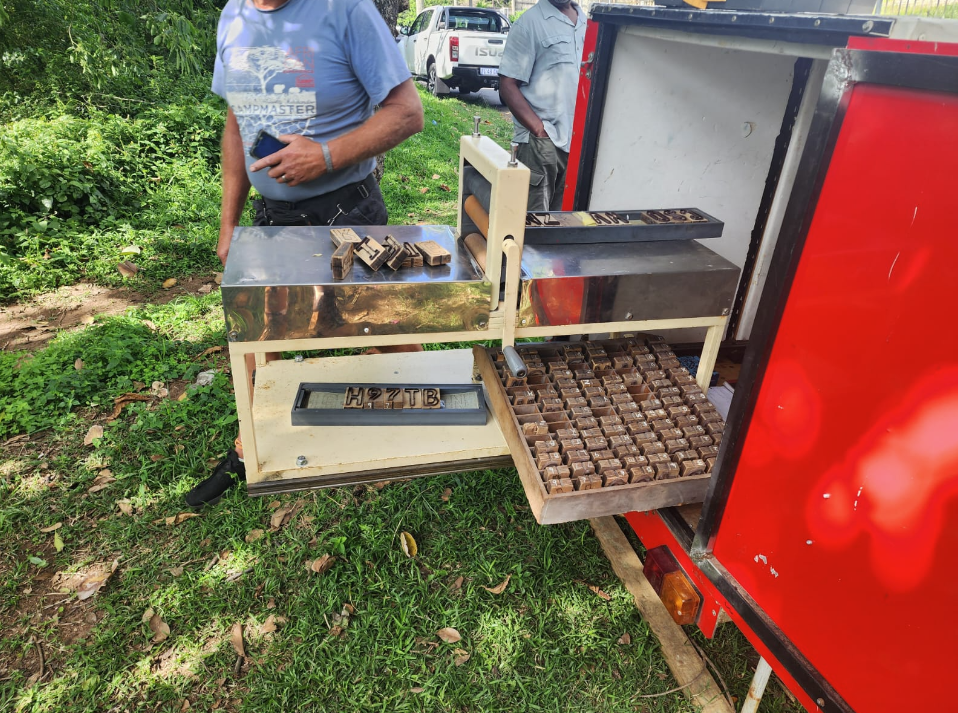
Lead the way in ensuring that registration and fair trade allow everyone the business opportunity they (deserve)

Breaking News

Growing crisis of illegal number plates

Scourge of illegal number plates

John Maytham speaks to Jan De Lange from the License Plate Association of South Africa, LAZA, to unpack how the system is being exploited, and what impact illegal embossing and fake plates are having on crime fighting and road safety. Presenter John Maytham is an actor and author-turned-talk radio veteran and seasoned journalist. His show serves a round-up of local and international news coupled with the latest in business, sport, traffic and weather. The host’s eclectic interests mean the program often surprises the audience with intriguing book reviews and inspiring interviews profiling artists.  A daily highlight is Rapid Fire, just after 5:30pm. CapeTalk fans call in, to stump the presenter with their general knowledge questions. Another firm favourite is the humorous Thursday crossing with award-winning journalist Rebecca Davis, called “Plan B”.  Thank you for listening to a podcast from Afternoon Drive with John Maytham  Listen live on Primedia+ weekdays from 15:00 and 18:00 (SA Time) to Afternoon Drive with John Maytham broadcast on CapeTalk https://buff.ly/NnFM3Nk  For more from the show go to https://buff.ly/BSFy4Cn or find all the catch-up podcasts here https://buff.ly/n8nWt4x  Subscribe to the CapeTalk Daily and Weekly Newsletters https://buff.ly/sbvVZD5    Follow us on social media:    CapeTalk on Facebook: https://www.facebook.com/CapeTalk  CapeTalk on TikTok: https://www.tiktok.com/@capetalk  CapeTalk on Instagram: https://www.instagram.com/  CapeTalk on X: https://x.com/CapeTalk  CapeTalk on YouTube: https://www.youtube.com/@CapeTalk567 

KZN Transport Department Warns Against Fake Personalised Number Plates

Motorists who fall for these illegal offers may end up with number plates that get cancelled, leaving them unable to drive legally. The warning comes as the province cracks down on a growing scam that targets people wanting unique plates for their cars.
What Personalised Number Plates Are and How to Get Them Legally
Personalised number plates, also known as vanity plates, allow vehicle owners to choose a special combination of letters and numbers for their cars. In South Africa, these plates must follow strict rules set by the Department of Transport. They can include letters and numbers but must not be offensive, and they cannot exceed seven characters excluding the provincial mark.
To get a personalised plate legally, motorists must apply through the official channels at their local traffic department or licensing centre. The application goes through a process where the Member of the Executive Council (MEC) for Transport approves it, provided the chosen combination is available and meets all requirements. The plate must also display the provincial logo and be made to the same standards as regular number plates.
The official cost for these plates is set by the department, and the process ensures that no two vehicles have the same plate. This system helps with identification and law enforcement on the roads.
The Growing Problem of Fake and Illegal Plates
The KwaZulu-Natal Department of Transport has uncovered cases where people are selling personalised number plates illegally on social media platforms at prices up to four times higher than the official rate. These sellers often promise quick and easy custom plates without going through the proper application process.
Many buyers are attracted by the idea of getting a unique plate fast and without the usual paperwork. However, these plates are not registered properly and can be cancelled by the department at any time. When that happens, the vehicle owner is left with a plate that is no longer valid, which can lead to fines, points on their licence, or even having their vehicle impounded.
The scam not only costs motorists money but also creates problems for road safety and policing. Fake plates make it harder for authorities to track vehicles involved in accidents or crimes. In some cases, criminals use cloned or fake plates to avoid detection while committing offences.
Risks for Motorists Who Buy Fake Plates
Motorists who purchase these illegal personalised plates face several serious risks. The most immediate one is that the plates can be cancelled without notice, leaving the owner unable to drive the vehicle legally until new plates are obtained through the correct channels.
There are also financial implications. Besides losing the money paid to the illegal seller, vehicle owners may have to pay additional fees to get new legal plates. In some cases, they could face fines from traffic officers who spot the invalid plates during routine checks.
More seriously, if a vehicle with a fake plate is involved in an accident or a crime, the owner could be drawn into investigations even if they had nothing to do with the incident. This creates unnecessary stress and legal complications for innocent drivers who simply wanted a nice-looking number plate.
The department has made it clear that it will not hesitate to cancel any plates found to have been sold or obtained illegally. This firm stance is meant to protect the integrity of the number plate system and discourage people from participating in these scams.
What Motorists Should Do to Stay Safe
The KwaZulu-Natal Department of Transport advises all vehicle owners to only deal with official licensing centres when applying for personalised number plates. Anyone who has already bought a plate from an unofficial source should check with their local traffic department to confirm whether it is valid.
If the plate is found to be illegal, the owner will need to apply for a new one through the proper process. It is better to act quickly rather than wait for problems to arise during a traffic stop or when renewing a vehicle licence.
Drivers are also encouraged to report any suspicious advertisements for cheap personalised plates on social media. Reporting these scams helps the department track down the people behind them and protect other motorists from falling victim.
For those who want a personalised plate, the official route may take a bit longer, but it guarantees that the plate is legal and will not cause future headaches. The department continues to process applications and encourages patience and compliance with the rules.
Broader Efforts to Fight Number Plate Fraud
The warning about fake personalised plates forms part of wider efforts by the KwaZulu-Natal Department of Transport to clean up irregularities in the vehicle registration system. Cloned number plates and other forms of fraud have become a growing concern across the country, as criminals use them to commit crimes while avoiding detection.
By cracking down on illegal sales of vanity plates, the department aims to reduce opportunities for fraud and improve road safety. Proper number plates help police and traffic officers identify vehicles quickly and accurately, which is essential for enforcing traffic laws and investigating incidents.
Motorists are reminded that number plates are not just decorative items but important tools for identification and accountability on the roads. Using fake or illegal ones undermines this system and puts everyone at risk.
Advice for Vehicle Owners in KwaZulu-Natal
Vehicle owners in KwaZulu-Natal are urged to stay informed about the rules around number plates and to avoid any shortcuts that could lead to trouble. If someone is offering a personalised plate at a suspiciously low price or promising instant results without paperwork, it is likely a scam.
The best way to get a legal personalised plate is to visit an official licensing centre and follow the application process. This ensures compliance with the law and peace of mind for the vehicle owner.
As the department continues its crackdown on illegal plates, more motorists may find themselves facing consequences if they have bought fake ones. Acting now to regularise any questionable plates can save time, money, and stress in the long run.
The KwaZulu-Natal Department of Transport remains committed to protecting motorists and maintaining the integrity of the province’s vehicle registration system. By heeding the warning against fake personalised number plates, drivers can avoid unnecessary problems and contribute to safer roads for everyone.

MEDIA STATEMENT
FOR IMMEDIATE RELEASE
1 June 2026
LAZA WELCOMES NATIONAL MEDIA SPOTLIGHT ON ILLEGAL NUMBER PLATE INDUSTRY
The License Plate Association of South Africa (LAZA) welcomes the front-page coverage by Business Day highlighting the growing crisis of illegal number plates and the serious threat it poses to public safety, law enforcement, and legitimate businesses across South Africa.

For several years, LAZA has consistently warned government departments, regulators, law enforcement agencies, and industry stakeholders about the unlawful manufacture and sale of number plates, blank plates, and embossing equipment to unregistered operators. The issue has now reached a point where the illegal supply chain is openly undermining the integrity of South Africa’s vehicle identification system.

According to information gathered by LAZA and its members, as many as 40% of embossers operating in the market may be doing so illegally, without the required approvals, record-keeping obligations, or regulatory oversight. This has created an uneven playing field where compliant businesses are being forced to compete against operators who disregard the law.

Legal embossers, many of whom are small family-owned businesses, are required to undergo extensive compliance procedures, maintain records, verify customer documentation, and pay significant certification and audit costs. Meanwhile, illegal operators are able to obtain blank plates and equipment with little or no scrutiny, allowing them to undercut lawful businesses and erode confidence in the industry.

The consequences extend far beyond commercial losses. Illegal number plates facilitate vehicle cloning, fraud, criminal activity, and the circumvention of law enforcement investigations. Every illegally produced plate weakens the integrity of South Africa’s vehicle registration system.

LAZA therefore renews its call for coordinated action by the Department of Transport, the Department of Trade, Industry and Competition (dtic), the South African Bureau of Standards (SABS), provincial authorities, and law enforcement agencies to investigate and dismantle the illegal supply chain at its source.

We further wish to thank Toby Chance MP, Mlondi Mdluli MP, and journalist Kabelo Khumalo for helping bring national attention to this critical issue.

The time for discussions has passed. The industry requires decisive enforcement action to protect consumers, legitimate businesses, and the safety and security of all South Africans.
Issued by:
Jan De Lange
President
License Plate Association of South Africa (LAZA)

Two Vehicle Crime Suspects Arrested in Pinetown With False Plates and Stolen Property

Two theft out of vehicle suspects were arrested following a coordinated operation between Marshall Security’s Special Operations Team (SOT) and Pinetown SAPS Trio Crimes after suspects linked to vehicle-related crimes were intercepted in Pinetown.

On 27 May 2026 at approximately 17h40, members received information regarding suspects in a silver VW Polo who were allegedly attempting to break into a vehicle at a well-known shopping centre in the Waterfall area. The suspects thereafter fled in the direction of Hillcrest.

Marshall Security Special Operations Team members immediately proceeded to the area and conducted patrols in an effort to locate the suspects; however, initial searches yielded negative results.

At approximately 19h00, further information was received indicating that the same suspects were allegedly attempting to steal items from a vehicle at a well-known shopping centre in Pinetown.

Marshall Security Special Operations Team members immediately proceeded to the scene and conducted patrols within the parking area while remaining on the lookout for the suspects.

Shortly thereafter, members observed the identified silver VW Polo occupied by two suspects inside the parking lot. Marshall Security SOT members, together with Pinetown SAPS Trio Crimes members, approached the vehicle. Upon noticing the approaching members, the suspects attempted to reverse and flee the scene. Members acted swiftly, successfully blocking the vehicle and apprehending both suspects.
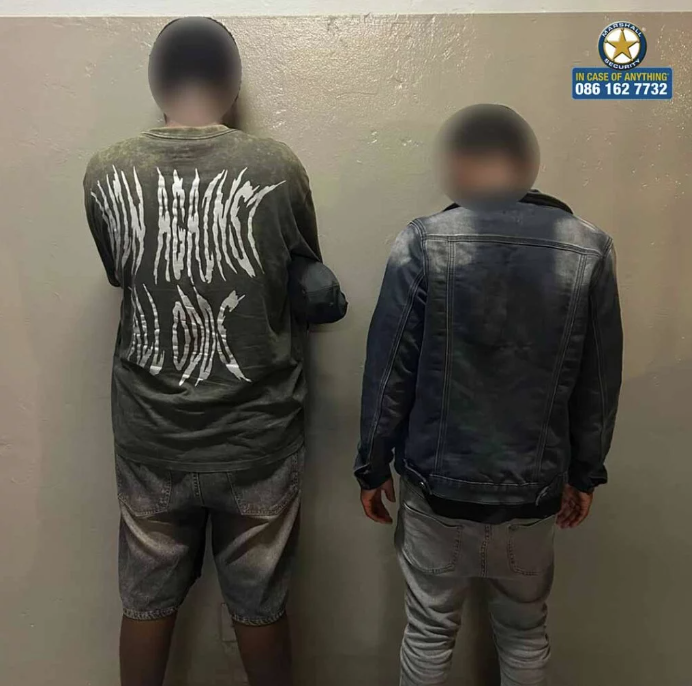
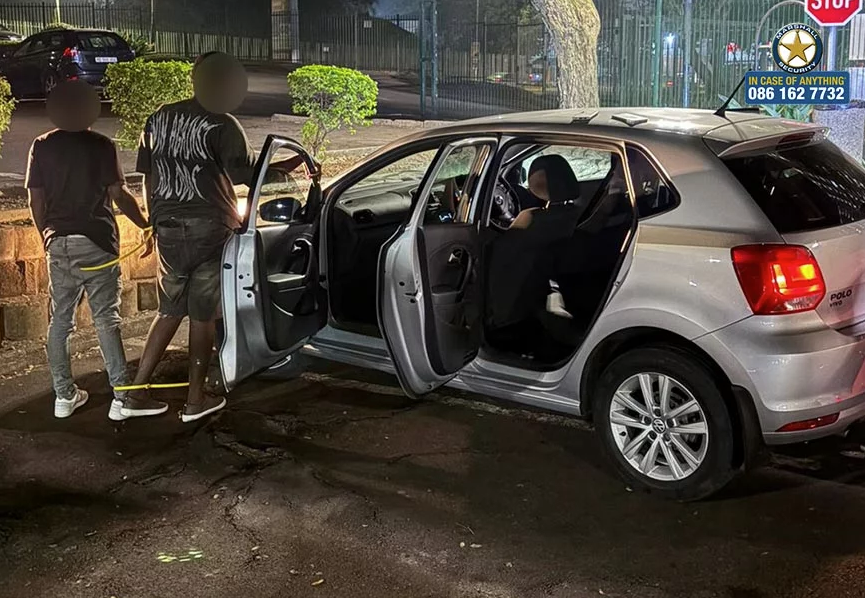
Pinetown SAPS Trio Crimes members conducted a search of the suspects and the vehicle.

During the search, members discovered car-breaking implements together with a blue laptop bag containing a laptop, wallet, and additional items which the suspects could not account for.

Further inspection of the vehicle revealed that the registration number displayed on the VW Polo consisted of false registration plates. Members subsequently located the vehicle’s original registration plate, concealed underneath the front passenger seat.

Further investigation established that the recovered blue laptop bag had been stolen during a theft out of motor vehicle incident at a well-known shopping centre in the Hillcrest area.

Pinetown SAPS Trio Crimes thereafter took the suspects, vehicle, and all recovered exhibits to Pinetown SAPS for further investigation and processing.

This vehicle theft suspects arrested case highlights the effectiveness of intelligence-driven operations, proactive patrols, and strong working partnerships between Marshall Security Special Operations Team members and Pinetown SAPS Trio Crimes. Through coordinated action and rapid response, suspects linked to vehicle-related crime were intercepted before further incidents could occur, reinforcing the value of vigilance and decisive action in protecting our communities.

Cape Town Council amends traffic by-laws to intensify vehicle impoundments

The Council of Cape Town has taken a decisive step towards enhancing road safety after approving amendments to the Traffic By-law on Wednesday, Cape {town} Etc reports.

The decision which is now one step closer to implementation pending gazetting, is poised to increase the impoundment of vehicles involved in reckless driving behaviours, potentially saving countless lives on the city’s congested roads.

The amendments specifically empower Traffic Officers to impound vehicles in various instances. These include cases of illegal street racing, driving under the influence of alcohol, operating without a valid licence, and reckless driving that poses a danger to passengers and pedestrians alike.

Additionally, vehicles with false number plates or failing to display the required minimum number plates are also now at risk of being impounded.

In a reflection of the pressing need for these amendments, recent statistics from the Traffic Service reveal a staggering 1,512 arrests for driving under the influence and 158 arrests for reckless driving in the first nine months of the current financial year.


Alarmingly, the number of arrests for drunk driving has surged by 10% compared to the previous year, indicating a compelling need for stricter controls to combat road-related lawlessness.

Mayco for Safety and Security, Alderman JP Smith, commented on the situation, noting the inadequacy of existing measures to deter reckless behaviour. ‘These amendments have been highlighted continuously, and road users are urged to reconsider their ways or face severe consequences if caught,’ he stated.


Recognising the increased need for impound facilities, Smith affirmed that work is underway to expand the Ndabeni impound facility, alongside plans for a much larger impound location.

The urgency of addressing road safety cannot be overstated, especially given the findings of the Urban Mobility Directorate’s latest Traffic Crash Report.

From 2021 to 2024, a shocking total of 3,007 individuals lost their lives in traffic incidents across Cape Town, averaging one death every 11 hours and 40 minutes and 68% of these fatalities were pedestrians, underscoring the vulnerability of this group amidst rising vehicular speeds and lax driving standards.

Mayco for Urban Mobility, Councillor Rob Quintas echoed these concerns, emphasising the need for adherence to traffic rules to save lives. ‘We welcome the amendments and congratulate our colleagues in Safety and Security for taking this bold step towards making our roads safer for all road users,’ he stated.

The approval from Council now paves the way for these amendments to be gazetted before they come into effect, with the Traffic Service already working on integrating this new framework into daily operations.

Chairperson of the City’s Safety and Security Portfolio Committee, Councillor Mzwakhe Nqavashe, expressed pride in the progress made and reiterated the necessity of the amendments in curbing dangerous behaviour on the roads.

‘We hope that these amendments will further assist in reducing dangerous behaviour on our roads and save lives. We also hope that it will bring some respite to the many law-abiding road users who have had to put up with the selfish actions of others for far too long,’ he concluded.

AfriForum threatens legal action over Gauteng number plate rollout

Lobby group AfriForum has warned the Gauteng Department of Transport to halt its planned rollout of new number plates or face legal action.

The civil rights organisation argues the project should be suspended until the Competition Tribunal completes its case against three manufacturers accused of fixing plate prices.

AfriForum’s Louis Boshoff said government has not been clear about costs and deadlines, and motorists should not be forced to pay for expensive new plates.

“It is obvious that the department should not proceed with requiring vehicle owners to purchase new number plates while it is known that the number plates are being sold at prices above market value. It is disappointing has to threaten legal action because the department is unwilling to make a simple undertaking.”

The Gauteng government launched a pilot project for the new number plate system in June last year, saying it would decrease the use of counterfeit or cloned plates.

Speaking at the launch, at the Nasrec Expo Centre in Johannesburg, Premier Panyaza Lesufi said new number plates will assist with revenue collection, regulation of roadworthiness and insurance.

The new number plates feature an embedded QR code, the National flag, and a tamper-evident security decal fixed to enhance anti-counterfeiting measures.

Soon after the launch, AfriForum submitted a Promotion of Access to Information Act application to access details on the costs motorists would incur for Gauteng’s new number plates.

Battle over new number plates in Gauteng

Civil rights organisation AfriForum has demanded that the Gauteng Provincial Government halt the planned rollout of new number plates in the province.

It said it would launch legal proceedings if Gauteng did not pause the rollout until the Competition Tribunal finished its prosecution of South Africa’s number plate manufacturers over alleged price-fixing.

AfriForum said it sent letters of demand to the Department of Transport in Gauteng and to Premier Panyaza Lesufi, demanding that the rollout be halted.

“AfriForum’s letter of demand follows renewed rumours that the provincial government intends to require all vehicle owners in Gauteng to purchase new number plates for their vehicles,” it said.

“This comes after the Competition Commission found in March that the country’s only three manufacturers of blank number plates had formed a cartel and colluded to fix higher prices.”

In March, the commission accused three companies in KwaZulu-Natal of collusion and price-fixing, namely Uniplate, New Number Plate Requisites (NNPR), and Unique Number Plate.

The three companies manufacture number plate blanks in South Africa, which eventually become full vehicle number plates and are made out of aluminium or perspex.

An investigation into the alleged number plate cartel found that from at least June 2023, the three companies fixed prices of number plate blanks supplied to customers across the country.

If the allegations are found to be true, it means that South African drivers have been paying artificially inflated prices for their plates for at least three years.

“The companies further agreed to impose a surcharge of R10 on all number plate blanks sold in KwaZulu-Natal,” the commission said at the time.

Together, the three companies account for the vast majority of South Africa’s plate blank manufacturing capacity.

The Competition Tribunal then launched an investigation into the three companies to uncover and prosecute any alleged wrongdoings.

Gauteng planned to force drivers to change their plates

The Gauteng Provincial Government launched a project last year in which its newly designed number plates were fitted to all provincial fleet vehicles.

“According to the original plan, the project was to be extended to all private vehicles in the province after six months,” said AfriForum.

“After it emerged that the price of number plates was excessively high due to collusion within the industry, AfriForum sought clarity.”

The civil rights group said it reached out to Gauteng to ask whether it would postpone this plan due to allegations of price-fixing of number plate blanks.

It said that, following several enquiries, it was unable to obtain any confirmation from the Department of Transport and was therefore compelled to send the letter of demand.

“It stands to reason that the Department should not proceed with requiring vehicle owners to purchase new number plates,” said AfriForum spokesperson Louis Boshoff.

“At least not while it is known that the plates are being sold at prices above market value.”

Boshoff stated that Gauteng’s new number plate project had been shrouded in controversy from the outset. The provincial government has yet to provide any cost estimate for the new plates.

“It is disappointing that AfriForum has to threaten legal action because the Department is unwilling to make a simple undertaking,” he said.

AfriForum also said that the department did not indicate how long vehicle owners in Gauteng would have to wait to acquire the new number plates.

“At present, all indications are that it would be better to place the project on hold,” Boshoff said.

“AfriForum will pull out all the stops to prevent Gauteng vehicle owners from having to spend thousands of rand each on unreasonably expensive number plates.”

Gautengse nommerplate:

AfriForum sal hof toe indien nodig

AfriForum het Maandag ’n prokureursbrief aan die Gautengse departement van vervoer en die kantoor van premier Panyaza Lesufi gerig en dring aan dat die uitrol van nuwe nommerplate gestaak word totdat die Mededingingstribunaal se vervolging van drie nommerplaatvervaardigers voltooi is.

Die burgerregteorganisasie waarsku ook dat hy ’n hofaansoek teen die departement sal bring indien daar nie ag geslaan word op die eise in die brief nie.

AfriForum se prokureursbrief kom in reaksie op hernude gerugte dat die provinsiale regering van alle voertuigeienaars in Gauteng wil vereis om nuwe nommerplate vir hul voertuie aan te skaf. Dit terwyl die Mededingingskommissie in Maart bevind het dat die land se enigste drie vervaardigers van blanko nommerplate ’n kartel gevorm het en saamspan om hoër pryse vas te stel.

Die Gautengse departement van vervoer het in Junie verlede jaar ’n projek van stapel gestuur waarin nuut ontwerpte nommerplate op al die provinsie se vlootvoertuie aangebring is. Volgens aanvanklike beplanning moes dié projek ná ses maande na alle privaat voertuie in die provinsie uitgebrei word.

Maroela Media het vroeër berig Lesufi het voorheen gesê dié nuwe nommerplate vir voertuigeienaars in Gauteng is ’n geleentheid om misdaadbekamping in die provinsie op te skerp.

Hy glo die nuwe intelligente nommerplaatstelsel is ’n “sprong vorentoe” en glo die nommerplate is veiliger en naspeurbaar, aangesien dit ’n forensiese QR-kode het waarmee nie gepeuter kan word nie.

Louis Boshoff, woordvoerder van AfriForum, sê ná dit aan die lig gekom het dat die pryse van nommerplate uitermate hoog is vanweë samespanning in die bedryf, wou AfriForum weet of die Gautengse departement dit in ag neem en die projek gaan uitstel.

“Ná verskeie navrae kon AfriForum geen bevestiging van die departement in hierdie verband kry nie en is die organisasie genoop om nou ’n prokureursbrief te rig.”

Volgens Boshoff is dit vanselfsprekend dat die departement nie moet voortgaan om van voertuigeienaars te verwag om nuwe nommerplate te koop, terwyl dit bekend is dat die plate teen pryse bo markwaarde verkoop word nie.

“Dit is teleurstellend dat AfriForum met regsaksie moet dreig omdat die departement nie bereid is om ’n eenvoudige voorneme aan te gaan nie.”

Die projek om nuwe nommerplate vir Gauteng uit te rol, is van die begin af in omstredenheid gehul nadat die provinsiale regering verlede jaar aangedui het dat hulle geen kosteberaming vir die nuwe nommerplate kan voorsien nie. Die departement kon in reaksie op ’n aansoek van AfriForum ingevolge die Wet op Bevordering van Toegang tot Inligting (Paia) ook geen aanduiding gee van hoe lank voertuigeienaars tyd sal hê om die nuwe nommerplate aan te skaf nie.

“Alles dui tans daarop dat dit beter is om die projek eers uit te stel. AfriForum sal alles in die stryd werp om te keer dat Gautengse voertuigeienaars nou duisende rande moet spandeer om onredelik duur nommerplate aan te skaf,” sê Boshoff.

AfriForum’s attorneys today sent a letter of demand to the Gauteng Department of Transport and the office of the Premier, Panyaza Lesufi, demanding that the rollout of new number plates be halted until the Competition Tribunal has concluded its prosecution of three number plate manufacturers. The civil rights organisation further warned that it will institute legal proceedings against the Department should the demands contained in the letter not be met.

AfriForum’s letter of demand follows renewed rumours that the provincial government intends to require all vehicle owners in Gauteng to purchase new number plates for their vehicles. This comes after the Competition Commission found in March that the country’s only three manufacturers of blank number plates had formed a cartel and colluded to fix higher prices.

In June last year, the Gauteng Department of Transport launched a project in which newly designed number plates were fitted to all provincial fleet vehicles. According to the original plan, the project was to be extended to all private vehicles in the province after six months. After it emerged that the price of number plates was excessively high due to collusion within the industry, AfriForum sought clarity on whether the Gauteng Department would take this into account and postpone the project. Following several enquiries, AfriForum was unable to obtain any confirmation from the Department in this regard and was compelled to issue a letter of demand.

According to Louis Boshoff, Spokesperson for AfriForum, it stands to reason that the Department should not proceed with requiring vehicle owners to purchase new number plates while it is known that the plates are being sold at prices above market value. “It is disappointing that AfriForum has to threaten legal action because the Department is unwilling to make a simple undertaking.”

The project to roll out new number plates in Gauteng has been shrouded in controversy from the outset after the provincial government indicated last year that it could not provide any cost estimate for the new number plates. In response to an application by AfriForum in terms of the Promotion of Access to Information Act (PAIA), the Department was also unable to indicate how much time vehicle owners would have to acquire the new number plates.

“At present, all indications are that it would be better to place the project on hold. AfriForum will pull out all the stops to prevent Gauteng vehicle owners from having to spend thousands of rand each on unreasonably expensive number plates,” Boshoff concludes.

Issued by AfriForum spokesperson Louis Boshoff 

The Sunday Times ZA headline this Sunday was perhaps a bit hyperbolic – “SABS faces financial ruin”. But the underlying story was not.
Deputy Editor Kabelo Kumalo asked for my comment on the tender the SABS issued last week for a consultant to come in and review its business model and set it on a path of financial sustainability.
It is not unusual for organisations under stress to seek outside help. The SABS has been without a permanent CEO since 2018 and since then has experienced leadership instability, governance failures, multiple cyber-attacks, labour unrest and operational underperformance.
These have been exposed by whistleblowers, who through their brave efforts in the face of threats, intimidation and in some cases suspension, have revealed the depth of the rot.
The business model of the SABS, arguably, was rendered unsustainable after it was demerged in 2008, leading to the creation of the National Regulator for Compulsory Specifications (NRCS).
The appointed consultant will need to look beyond just the SABS operational performance and take into account the NRCS, to establish whether the decision to demerge was the right one.
The scrutiny the Democratic Alliance put the SABS under over many years eventually led Minister Tau to appoint TSU International in February 2025 to conduct an investigation into the problems at the institution.
The SABS board is due to present the findings of this investigation to the Portfolio Committee on 29th May when we will have an opportunity to establish whether necessary actions are being taken to address the deep-rooted problems revealed by the whistleblowers.
Deputy Minister and DA MP Alexandra Abrahams has delegated responsibility for the SABS and is serious about turning the SABS around.
This morning I was interviewed on this topic by 702 Bongani Bingwa on his #702Breakfast show. The SABS mark of quality has suffered badly in recently years and needs a makeover to restore public trust.

Suspect arrested after high-speed chase in Joburg CBD

Officers recovered live ammunition and false registration plates after a suspect allegedly linked to a planned business robbery was arrested in the Johannesburg CBD.

Be Careful Where You Buy Your Number Plates

To ensure legal, high-quality number plates, always use an approved embosser.

Contact LAZA today and we will connect you with a certified embosser in your area.

.

We’re excited to invite you and your organization to join the LAZA SA family as a valued member and collaborator.

Lead the way in ensuring that registration and fair trade allow everyone the business opportunity they deserve

Latest News

Become A Member Today

Become a member of the License Plate Association of South Africa.

Scroll to Top